Why Does a Week Have Seven Days?
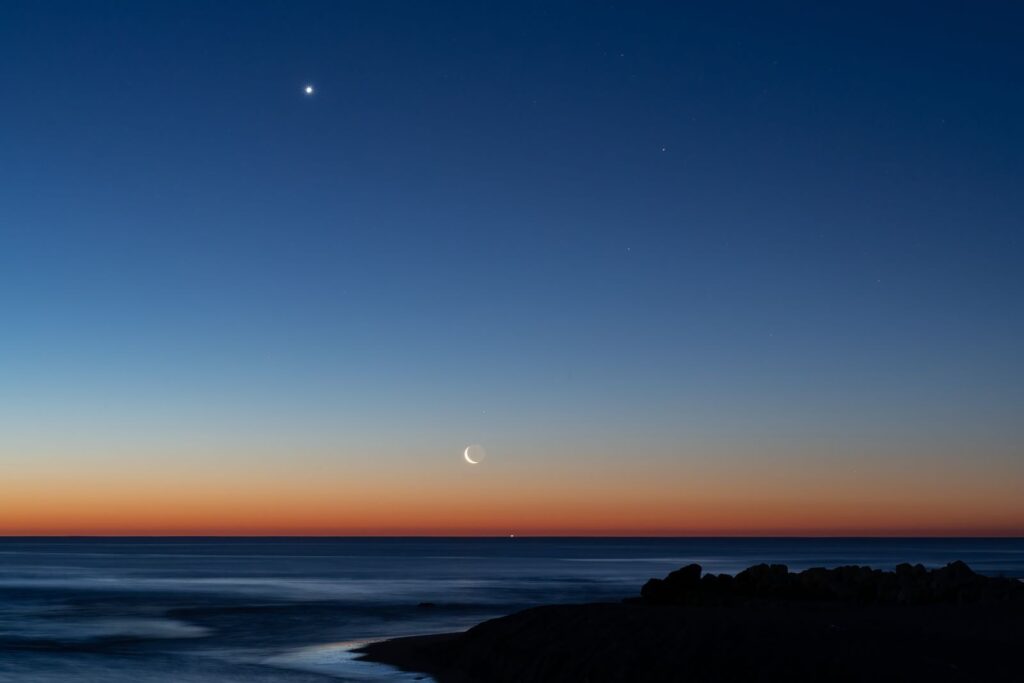
Short answer: Nothing in the sky lasts exactly seven days, so the week is a human invention, not a natural cycle. Its roots most likely lie in ancient Babylon, where people counted seven moving lights in the sky and marked every seventh day of the month, and it was then carried forward by the Jewish Sabbath, Roman astrology and Christianity. Historians are honest that the very first step is uncertain, but the habit has proved almost impossible to break.
Key takeaways
- The day, the month and the year each follow something in the sky. The week does not: seven days fit neatly into neither the Moon’s cycle nor the year.
- The best supported starting point is Babylon, where seven “planets” (the Sun, the Moon and five planets visible without a telescope) were known and the number seven was held in special regard.
- The Jewish Sabbath and the Roman habit of naming days after planets later merged into the week we use now.
- English day names are a mix: three come from the Sun, Moon and Saturn, and four from northern European gods.
- Revolutionary France tried a ten-day week and the Soviet Union tried five-day and six-day cycles. Both gave up.
The odd one out in the calendar
Most units of time are borrowed from nature. A day follows the Sun’s rising and setting. A month began as one round of the Moon’s phases, which NASA puts at 29.5 days from new Moon to new Moon. A year follows the seasons: the U.S. Naval Observatory gives the tropical year (the time it takes the seasons to come round again) as about 365.2422 days.
Now try to fit a week into those. Divide 29.5 days by seven and you get a little over four weeks, with a day and a half left over. A 365-day year holds 52 weeks plus one stray day, which is why your birthday lands on a different weekday each year. Royal Museums Greenwich describes the week as a curious 23 percent of a lunar month.
The closest natural match is a quarter of the Moon’s cycle. New Moon, half Moon, full Moon and half Moon again are each a bit more than seven days apart. That may be part of why seven felt right, but a week that truly followed the Moon would need resetting every month. Ours never is.
Babylon and the seven wanderers
The trail leads to the Babylonians, skilled sky watchers who lived in Mesopotamia, in what is now Iraq. Two things about them matter here.
First, they counted seven special lights in the sky. Before telescopes, people could see seven bodies that moved against the background of fixed stars: the Sun, the Moon, Mercury, Venus, Mars, Jupiter and Saturn. In this old sense, the Sun and Moon counted as “planets” too. Royal Museums Greenwich notes that the Babylonians venerated the number seven.
Second, their calendar treated certain days of each month as special. According to astronomer David Harper, the Babylonian calendar set aside the 7th, 14th, 19th, 21st and 28th days of the month. Four of those five are multiples of seven. These were days of the month, though, so the count began again with each new Moon.
How sure are historians?
Not very, and good sources say so. Royal Museums Greenwich traces the seven-day week to the Babylonians and to a decree of King Sargon I of Akkad around 2300 BCE. Harper, by contrast, writes that the origin is hard to trace, and the long-running Calendar FAQ goes further, warning that nothing can be said with certainty and that speculation is often presented as fact. A fair summary: Babylon is the leading candidate, and nobody can point to the day the first week began.
From Babylon to the Sabbath to Rome
The Hebrew Bible opens with a seven-day pattern: in Genesis, the world is made in six days and the seventh is a day of rest. That seventh day became the Jewish Sabbath, kept on Saturday. The Jews were for a time captives of the Babylonians, a period known as the Exile, and afterwards the Jewish calendar used Babylonian month names. Harper suggests the week may have entered Judaism at that time, and historian Kristin Heineman tells the story the same way. The word “may” is doing real work there.
Rome began with a different rhythm. In early Rome there was an eight-day cycle between market days. The seven-day cycle gradually took over, and Harper thinks that astrology may have had more to do with this than Jewish or Babylonian influence. The Roman historian Cassius Dio, describing the Jewish day of rest as “the day of Saturn”, remarked that naming days after the seven planets was a custom started by the Egyptians, that it had spread to all mankind, and that it was comparatively recent in his time. So even an ancient author saw the planetary week as a newcomer, and he credited Egypt, not Babylon.
In the year 321 the emperor Constantine issued a law telling judges, townspeople and craftsmen to rest on “the venerable day of the Sun”, while letting farmers carry on working. The church historian Philip Schaff pointed out that the law used the old planetary name and did not mention Christianity at all, so it suited sun worshippers and Christians alike.
Where the day names come from
The Romans named the days after the seven planets, which also carried the names of gods. French still shows this clearly. In English and other Germanic languages, four of the Roman gods were swapped for northern ones.
| English day | Roman planet | French name | Who the English name honours |
|---|---|---|---|
| Sunday | Sun | (Latin: dies solis) | The Sun |
| Monday | Moon | lundi | The Moon |
| Tuesday | Mars | mardi | Tiw (also written Tiu) |
| Wednesday | Mercury | mercredi | Woden |
| Thursday | Jupiter | jeudi | Thor |
| Friday | Venus | vendredi | Frigg or Freya (sources differ) |
| Saturday | Saturn | samedi | Saturn |
Not every language followed. Jewish tradition numbered the days and named only the Sabbath, and in Russian, Tuesday means “second” and Thursday “fourth”.
Try it yourself: the planet order puzzle
Why do the days run in this order? Cassius Dio passed on an explanation based on giving each hour to a planet. You can test it with a pencil.
- Write the seven planets in the ancient order, from the one thought farthest away to the nearest: Saturn, Jupiter, Mars, Sun, Venus, Mercury, Moon.
- Give hour 1 of the first day to Saturn, hour 2 to Jupiter, and keep going round the list.
- After 24 hours you have been round three times, with three hours left over. So hour 1 of the next day lands three places further on, on the Sun.
- Repeat. The first hours fall on Saturn, Sun, Moon, Mars, Mercury, Jupiter, Venus.
- Name each day after the planet of its first hour and you have Saturday, Sunday, Monday and the rest, in the right order.
Dio also offered a second explanation based on musical intervals. The hour method is a neat fit, not proven history.
The weeks that failed
Seven has had rivals. The ancient Egyptians used a ten-day “week”, and two modern governments tried to replace seven on purpose.
France’s ten-day week
The French Republican calendar was adopted on 24 October 1793. It had twelve months of 30 days, each split into three ten-day weeks called décades, with days named by number from primidi to décadi. Only the tenth day was for rest. The aims were to strip out Christian and royal traces, to count time in tens, which reformers saw as the most natural system, and to cut the number of days off.
That last aim was the weak spot. One rest day in ten is a worse deal than one in seven, and many workers simply kept resting on Sunday. An agreement of 1801, the Concordat, brought back the old weekday names and Sunday rest for government employees, and Napoleon abolished the whole calendar from 1 January 1806.
The Soviet continuous week
In May 1929 the economist Yuri Larin proposed the nepreryvka, or continuous working week, so that factories could run every day of the year. Workers were split into five groups, often colour coded, and each group worked four days and rested on the fifth. There was no shared day off.
The trouble showed up at home. Husbands, wives and friends were often in different groups and rarely free together, and the newspaper Pravda was printing complaints by October 1929. In 1931 the plan changed to a six-day cycle with a common rest day on the 6th, 12th, 18th, 24th and 30th of each month. In the countryside many people ignored it and kept their Sunday markets and church services. On 26 June 1940 the seven-day week returned.
Why seven stuck
The failed experiments point to the reasons the week survives.
- Religion anchors it. Judaism, Christianity and Islam all organise worship and rest around a seven-day cycle. A government can rename the days, but it cannot easily move a holy day.
- A week only works if it is shared. The Soviet five-day cycle showed that a day off is worth much less when your family and friends are at work.
- It is independent of everything else. Because the week matches no cycle in the sky, there is never an astronomical reason to adjust it. When the Gregorian calendar reform dropped ten dates at once, the order of weekdays carried on untouched.
- It has enormous momentum. The Calendar FAQ notes there is no record of the cycle ever being broken, though Harper cautions that an unbroken run since Roman times cannot actually be proved.
Frequently asked questions
Is the seven-day week based on the Moon?
Only loosely. A quarter of the Moon’s 29.5-day cycle is a little over seven days, which may have inspired the number. But the week does not track the Moon: four weeks make 28 days, so the two drift apart within a single month.
Who invented the week?
No single person can be named. The Babylonians are the usual answer, but careful writers stress that the origin is uncertain. The week we use is better seen as a blend of Babylonian, Jewish and Roman customs.
Which day is the first day of the week?
It depends who you ask. Jewish and Christian practice usually counts Sunday as day one. The international standard for writing dates, ISO 8601, says the week starts on Monday.
Has any country used a different week in modern times?
Yes. France ran a ten-day week from 1793, and the Soviet Union used five-day and then six-day cycles between 1929 and 1940. Both went back to seven days.
The bottom line
The week is the one piece of the calendar that people made up and then agreed to keep. It probably began with Babylonian sky watchers and their seven wandering lights, gained a fixed day of rest from the Jewish Sabbath, and picked up planet names in the Roman world. Its exact birth is lost, and honest sources admit that. When governments tried to swap it for something more logical, ordinary people kept counting to seven.
Sources
- Why 12 months in a year, seven days in a week or 60 minutes in an hour?, Royal Museums Greenwich
- Moon Phases, NASA Science
- Leap Years, U.S. Naval Observatory, Astronomical Applications Department
- The Week, David Harper, Obliquity
- The Week, The Calendar FAQ, Claus Tøndering
- Cassius Dio, Roman History, Book 37, LacusCurtius, University of Chicago
- The Civil and Religious Sunday, in History of the Christian Church, Volume III, Philip Schaff, Christian Classics Ethereal Library
- Why are there 7 days in a week? Thank the Babylonians, Kristin Heineman, Astronomy magazine
- French Republican Calendar, World History Encyclopedia
- Labor Days: Reinventing the workweek in the Soviet Union, Tony Wood, Cabinet magazine
Last updated: November 2026.
This article is general information for curious readers, not professional advice.