Why Do Leaves Change Color in Autumn?
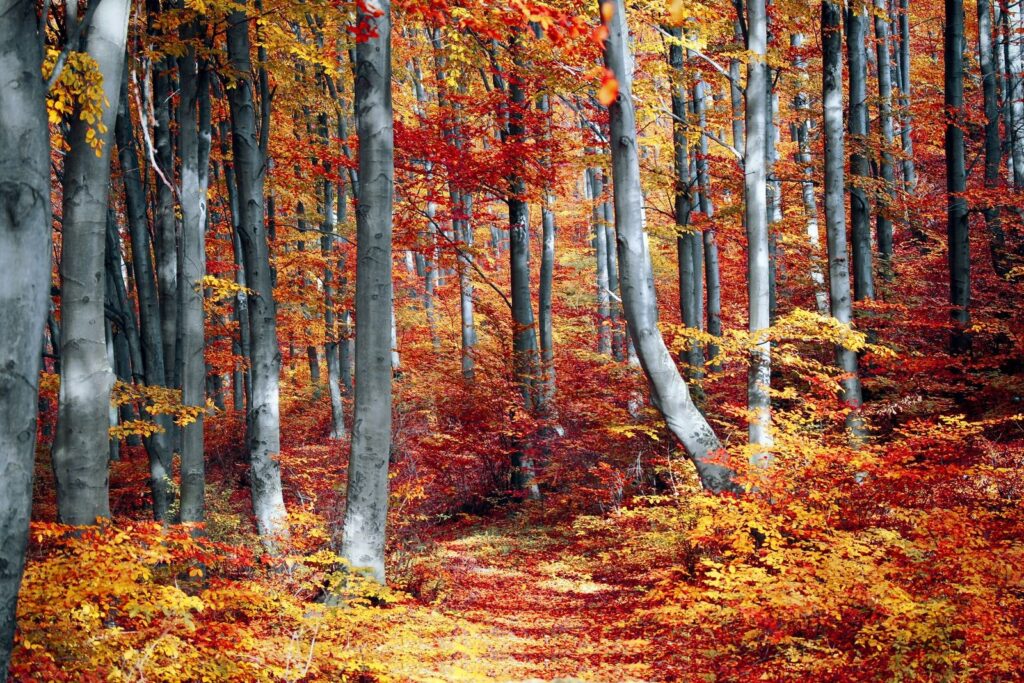
Short answer: As autumn nights lengthen, a tree stops making the green pigment chlorophyll, and the green fades. Yellow and orange pigments that were in the leaf all along are finally visible, and in many trees the leaf also makes fresh red and purple pigments. Weather then decides how bright the show is. Frost is not what paints the leaves.
Key takeaways
- Green leaves are hiding yellow and orange pigments (carotenoids), which are there all summer.
- Reds and purples (anthocyanins) are mostly made fresh in the leaf during autumn, which is why they vary so much from year to year.
- The most dependable signal is shortening day length, not a cold snap.
- The brightest reds tend to follow sunny days and cool, frost-free nights, after a healthy growing season.
- Different species, and even different sides of one tree, turn different colors.
The summer baseline: green hides everything
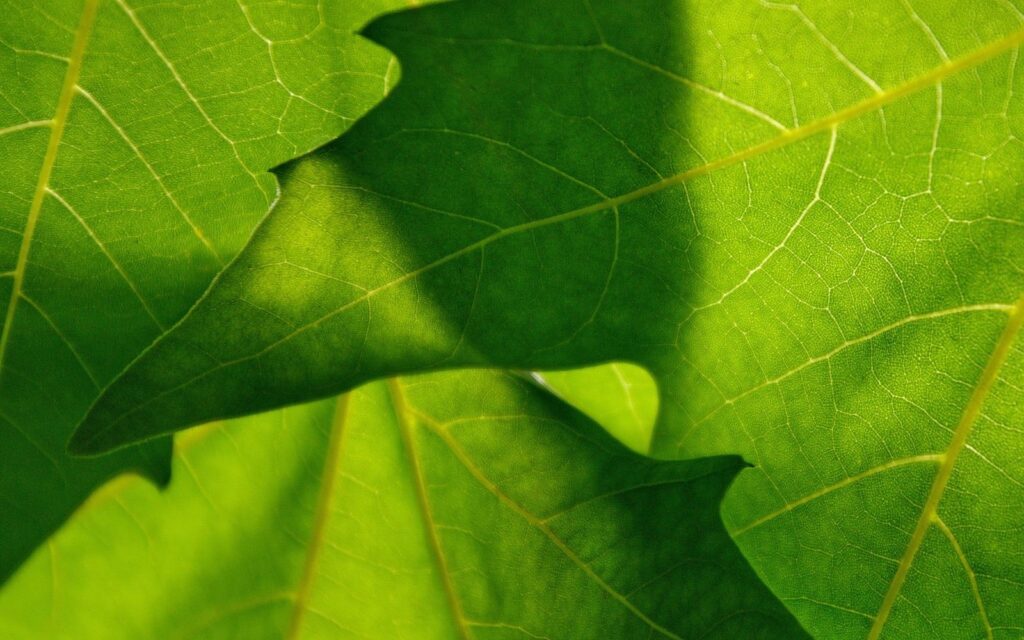
A leaf is a solar-powered food factory. Chlorophyll is the pigment that captures sunlight for photosynthesis, the process that turns light, water and air into sugars, and it gives leaves their green color. In summer the tree keeps replacing it, and there is so much of it that it overpowers every other pigment in the leaf.
That is the key to the whole story. Autumn color is mostly not something that is added to a leaf. It is something that is uncovered.
Step 1: chlorophyll breaks down
Penn State Extension calls shortening day length the most dependable seasonal signal that the growing season is ending. As nights lengthen, the tree slows and then stops making chlorophyll. The chlorophyll already in the leaf breaks down, and the green drains away. SUNY’s College of Environmental Science and Forestry (ESF) describes the trigger as shorter daylight plus changing temperatures, so temperature plays a part, but the length of the night is the steady clock that does not change from year to year the way weather does.
This is also why chilly mornings are tied to autumn in our minds but are not the cause. A warm September still has long nights getting longer, and the trees still notice.
Step 2: the hidden yellows and oranges appear
Carotenoids are yellow and orange pigments. They are present in the leaf all season, but chlorophyll hides them. When chlorophyll disappears, they show. This is the main reason birch, aspen and many maples glow yellow and gold. Purdue Extension lists birches, maples, hickories and aspens among the trees known for yellow, brown or orange fall color.
Step 3: some trees make new red and purple pigments
Anthocyanins are the red and purple pigments, and they behave differently. Penn State Extension notes that most of the anthocyanins responsible for fall color are produced in the leaf during autumn. Their production is linked to bright days and a build-up of sugar in leaf cells.
The sugar story goes like this. A leaf makes sugar in sunshine. Late in the season, the tree starts sealing the leaf off, and cool nights slow the movement of sugar out of it. Sugar that stays trapped in the leaf is available to be turned into red pigment. Purdue Extension notes that warm nights let sugars move out of the leaf, which mutes color. Illinois Extension adds that the sunny-days-and-cool-nights combination supports anthocyanin production.
Why the leaf lets go
While the color changes, the tree is preparing to drop the leaf. ESF explains that a layer of cells at the base of the leaf stem severs the leaf’s supporting tissue, and the tree seals the wound, leaving a leaf scar. Illinois Extension describes the whole process as a tree’s annual preparation for winter. Most broad-leaved trees in the north shed their leaves this way. Oaks may hold on to dead brown leaves into spring, and most conifers stay green all year.
| What you see | What is going on |
|---|---|
| Green fades first | Chlorophyll is no longer replaced, so it breaks down |
| Yellow and orange leaves | Carotenoids that were hidden all summer are now visible |
| Red or purple leaves | Anthocyanins made in the leaf in autumn, helped by trapped sugar |
| Tan or brown leaves | Little new pigment, so what is left of the leaf shows through |
| Leaves fall | A layer of cells at the stem severs the leaf, and the wound is sealed |
Why some years are brighter than others
Pigment chemistry is the same each year. Weather changes how much of each pigment gets made. The sources agree on the broad recipe.
- Best case: Illinois Extension describes the strongest displays as following a healthy growing season with adequate soil moisture, then sunny early-fall days and cool nights above freezing.
- Drought: Penn State Extension says drought can bring early color, muted color, early leaf drop or browning.
- Cloud and rain: Penn State Extension says cloudy days limit anthocyanin and wet conditions can keep chlorophyll in the leaves longer. Purdue Extension adds that warm, rainy fall weather reduces sugar and pigment production.
- Warm nights: Purdue Extension says they let sugar escape and mute the reds.
The sources differ on exact temperatures. NC State Extension describes cool nights between freezing and 45 degrees F as the sweet spot for reds. Purdue Extension gives below about 45 degrees F as the point favouring red intensity. So treat 45 degrees F as a rough guide, not a switch.
Why species differ
Purdue Extension notes that genetics set each species’ basic color pattern, and that does not change from year to year. Penn State Extension gives examples: red maples turn scarlet, sugar maples turn yellow or orange, oaks show red, brown and russet tones, ginkgo is gold, hickory is golden bronze and beech is light tan. Maples and birches usually color early, while many oaks color later.
Position matters too. Purdue Extension says leaves in full sun tend toward red, while shaded leaves tend toward yellow, so one tree can be two colors at once.
A common misconception: frost paints the leaves
Many people credit Jack Frost. NC State Extension Forestry says otherwise: the change comes from chemical changes inside the leaf under certain weather conditions. A hard freeze is more likely to spoil things. Penn State Extension lists damaging frost among the events that can shorten a display, Purdue Extension says an abrupt hard freeze can make leaves drop before they change, and ESF notes that early frost weakens maple reds. Cool nights help. Freezing nights hurt.
A second, smaller misconception is that yellow is made in the fall like red. It is not. Yellow was there all summer, hiding.
Things you can try or notice
- Walk around one tree and compare the sunny side with the shaded side. Sun-exposed leaves should lean red and shaded ones yellow.
- Learn two maples. A red maple should go scarlet and a sugar maple yellow to orange.
- Find an oak late in the season. Many color later than maples and some keep dead brown leaves on the branch into spring.
- Look for a single tree that turns in late summer while its neighbours are still green. Illinois Extension says that early change can be a sign of stress.
- Look at the twig where a leaf has fallen. The leaf scar is where the tree sealed the wound.
- Note which year was brighter, and recall the weather. Sunny days and cool nights tend to win.
Frequently asked questions
Why do some leaves just turn brown?
Illinois Extension notes that some trees turn tan or brown before dropping. ESF explains that a leaf’s final color depends on how much chlorophyll residue and other pigment remains, and each species has its own mix.
Does a dry summer ruin fall color?
It can dull it. Penn State Extension lists muted color, early leaf drop or browning as possible effects of drought. Illinois Extension says summer drought can weaken color or cause early leaf drop with little change in color.
Why does the same tree have red and yellow leaves?
Light exposure is one reason. Purdue Extension says sun-exposed leaves tend to turn red, while shaded leaves tend to turn yellow, and color can vary from one side of a tree to the other.
Why do evergreens stay green?
ESF notes that most conifers keep their leaves all year, so there is no seasonal shutdown of the same kind. Many broad-leaved trees in the north drop theirs.
Looking up in October
Autumn color is a slow reveal rather than a sudden painting. The yellows were always there, the reds are made to order, and the weather decides the volume. If you want to know whether a year will be brilliant, watch for sunny days, cool nights and a summer that was not too dry.
Sources
- The Science Behind Autumn Leaf Color, Penn State Extension
- Why are fall colors so brilliant some years and dull others?, Illinois Extension (University of Illinois)
- Why Fall Color is Sometimes a Dud, Purdue University Extension, Forestry and Natural Resources
- Change Is in the Air: The Miracle of Fall Colors, NC State Extension Forestry
- Why Leaves Change Color, SUNY College of Environmental Science and Forestry
Last updated: November 2026. This article is general information, not scientific advice.